
Dual vocational skills development and private sector engagement
Effective vocational skills development (VSD) hinges on strong private-sector engagement. While the state is responsible for national VET policies, collaboration with businesses ensures training quality and market relevance. Inspired by the success of dual VET systems in Switzerland and other countries, SDC adapts these principles to local contexts, emphasizing practical, hands-on training and the importance of public-private partnerships for sustainable VSD solutions.
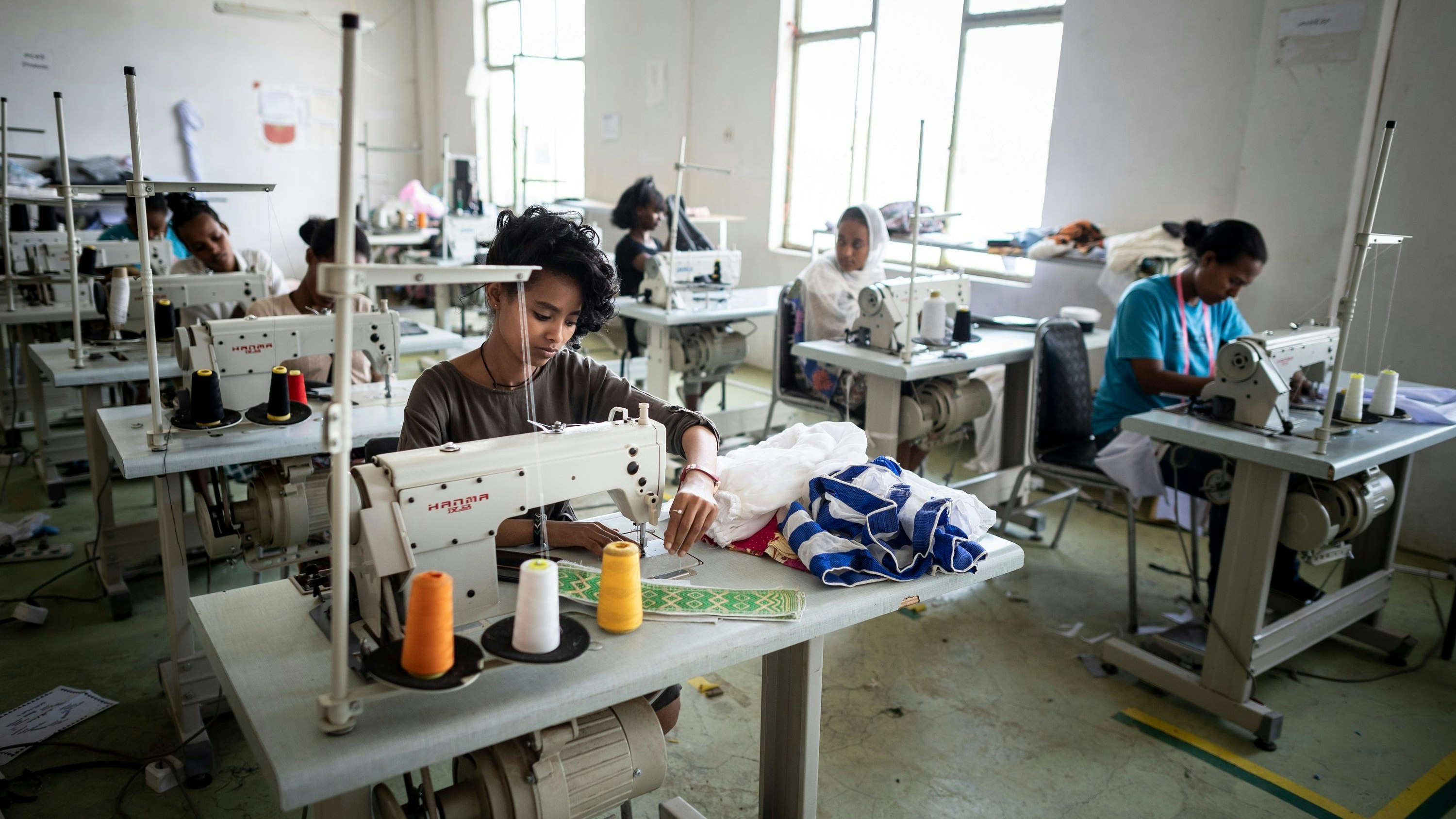
Engagement with the private sector
The engagement of the private sector is at the heart of every meaningful VSD system. No state can offer meaningful, quality vocational education and training. While the design of the national training policy and VET systems development is one of the core functions of the state, it is widely recognised that, in the interests of efficiency, effectiveness and quality, the state shall share this responsibility with private stakeholders in response to changing labour market requirements.
Private sector involvement thus provides the basis for change from supply-driven and state-dominated VET to market-oriented VET. In addition, the nature of skills development today requires close links with the private sector. A well-functioning public-private collaboration is a prerequisite for high-quality, hands-on vocational training in companies.
Promoting Dual VET systems
The dual VET system has long been a source of inspiration for SDC’s vocational skills development (VSD) initiatives. Countries like Switzerland, Austria, Germany, and Liechtenstein have achieved significant success with their dual VET systems, characterised by robust partnerships between the private sector, including businesses and professional organisations.
This practice-oriented approach and its alignment with labour market needs have been key factors in reducing youth unemployment in these countries, establishing the dual VET model as a benchmark for effective vocational education and training. While past efforts to replicate this model in other countries have shown that the system cannot be directly transplanted, its core principles and success factors provide valuable insights for adapting VET approaches to different contexts.
To support this effort, the Donor Committee for Dual Vocational Education and Training (DC dVET), co-founded by SDC, is crucial in promoting dual VET internationally. As a hub for knowledge exchange and best practices, DC dVET leverages Swiss expertise to advance effective VET solutions across diverse global settings.
Key dimensions
The DC dVET emphasises three key dimensions of dual VET:
- The Organizational-Institutional Dimension (the structure of the dual VET system)
- The Pedagogic Dimension (the dual training concept)
- The Societal Dimension (the professional role and its impact)
SDC maintains close coordination with other Swiss Federal Offices and the Swiss Federal University for Vocational Education and Training (SFUVET) to leverage Swiss expertise in vocational skills development. Additionally, SDC collaborates with the Swiss Forum for Skills Development and International Cooperation (FoBBIZ) to enhance VET initiatives. Swiss NGOs and specialised organisations also implement some projects. In SDC’s VET projects, dual VET principles are adapted to partner countries' unique conditions, respecting existing structures instead of directly replicating the Swiss model. Depending on project goals, these adaptations may take various forms to address local needs and contexts effectively.
Key documents
VSD typology
VSD in development cooperation
Partnerships with the private sector
Companies Engaging in Dual VET: Do Financial Incentives Matter? - Discussion Note - DC dVET
Engaging the Business Sector in Vocational Education and Training Working Tool - Working Tool - DC dVET
Forming Partnerships with the Private Sector - Lessons Learned - SDC
A summary of lessons learned by Market Systems Development Practitioners
Forming Partnerships with the Private Sector - Presentation - SDC
The Role of the Private Sector in Vocational Skills Development - SDC
- The Donor Committee for dual Vocational Education and Training DC dVET
Find more information about Gender Equality and Social Inclusion (GESI) in Dual VET on the DC dVET platform

Our VSD partners

Partnerships
The E+E works with a range of strategic partnerships at the international, regional and national levels to strengthen the international policy dialogue.