
Financial sector development lead topics
Financial sector development (FSD) are part of SDC’s efforts to reduce poverty in partner countries by enabling access for the poor and vulnerable communities to financial services, what is known as «financial inclusion». Financial inclusion means that individuals, households and businesses have opportunities to access and the ability to use a range of appropriate financial services that are responsibly and sustainably provided by formal financial institutions. Up to 1.7 billion people worldwide are excluded from the financial system. Financial inclusion is not an end to itself but highlighted as a target in many of the Sustainable Development Goals (SDGs). Hence, financial sector development and financial inclusion is key as an enabler of the Sustainable Development Goals (SDGs).
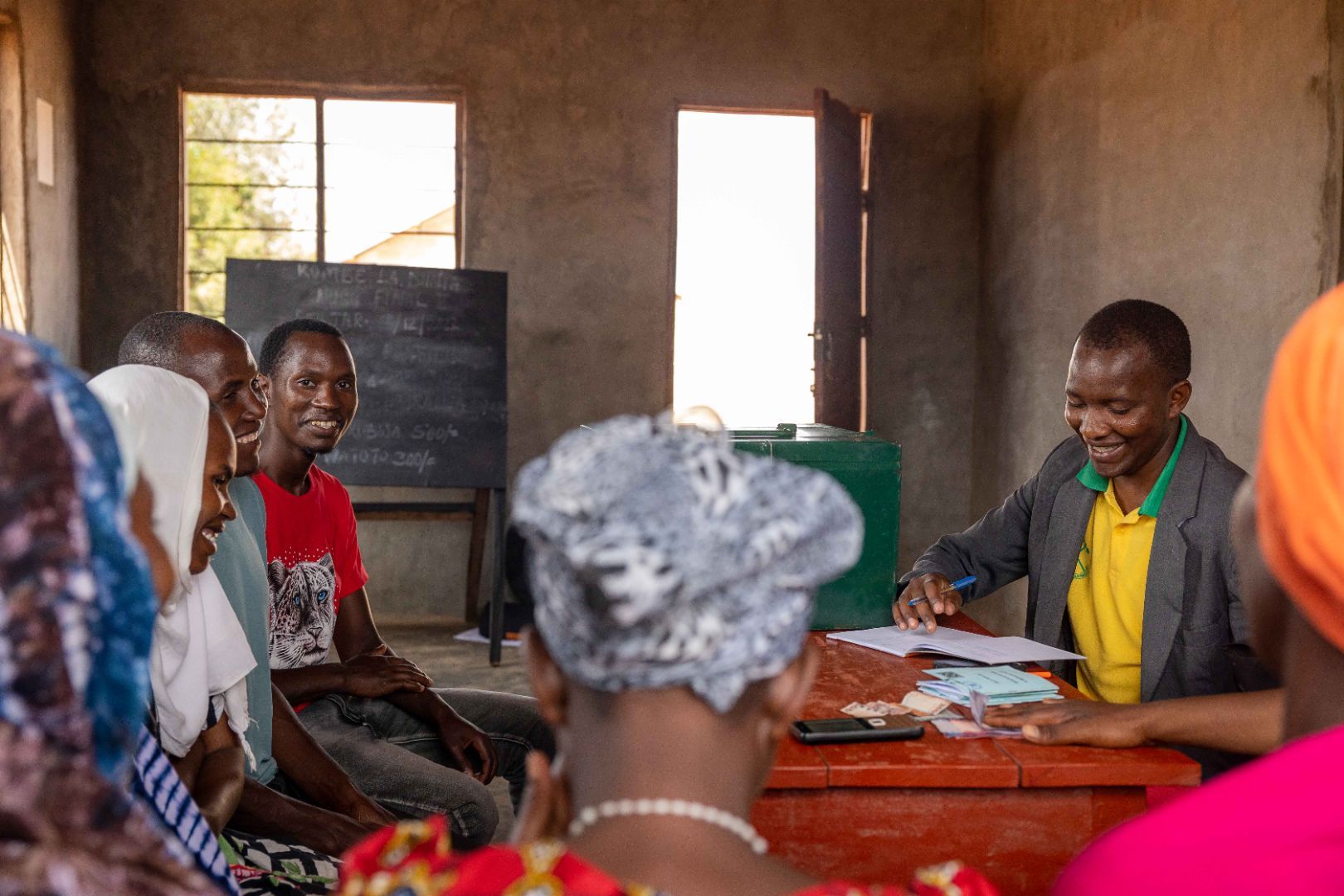
Financial education
Financial education teaches people money management practices related to earning, spending, saving, borrowing, inflation, insurance protection and investing. The educational system in developing economies often fails in offering appropriate financial education.
Financial education allows to improve the understanding, use and exploitation of financial services, while it prevents the damages of an inadequate use of the same (i.e. the over indebtedness). Proper understanding of money and financial services can also help low-income people to better face frequent liquidity shortages and improve their decision-making process.
Women’s financial inclusion
Women’s Financial Inclusion is about providing low-income women with effective and affordable financial tools to save and borrow money, make and receive payments, and manage risk for both women’s empowerment and poverty reduction. Increasing women’s financial inclusion is especially important as women disproportionately experience poverty, stemming from unequal divisions of labour and a lack of control over economic resources.
Savings
Savings are particularly important for households with small, irregular incomes. It is one of the main financial products to help the poor sustain their lives. Households need to save money to reduce their vulnerability to negative shocks, such as natural disasters, crop failures, job losses, illness or death in the family. There are various savings methods which enable poor people to be financially included, going from holding savings accounts to group savings and more recently digital savings- all methods supported by SDC.
Credit
Credit is usually designed to support entrepreneurship and alleviate poverty. It is a way to provide small business owners and entrepreneurs access to capital. The idea is to empower borrowers by helping them build a business which can create income and grow.
Due to various challenges such as inadequate credit methodologies, lack of interest by financial institutions, or highly perceived risks, in many countries MSMEs have only limited access to credit and other financial services.
Inclusive insurance
Inclusive Insurance helps poor people manage risks (such as illness, death, harvest failure, etc.). It encompasses various different approaches to reaching the unserved, underserved, vulnerable, or low-income populations in emerging markets with appropriate and affordable insurance products. Insurance is an efficient coping strategy against disasters and enables quicker recovery.
Remittances
For many poor countries, remittances are a mainstay of their economies. Remittances serve to secure the livelihoods of those left at home and at the same time contribute to growth and development. Households can thus invest in education and small businesses, and women in rural areas can strengthen their independence. Remittances are also a gateway to financial inclusion; they have already become much more important than development aid. With remittances savings can occur and can be reinvested in the local community; they can act as an engine for local development; and they can function as a buffer against instability at the macroeconomic level.
Digital financial services
The transformation that digital technology is creating has deep implications for the traditional financial services providers and is reshaping financial sectors, institutions and products/services, known now as digital finance. It represents opportunities for enabling financial inclusion and sustainable growth. It has become a leading driver of inclusion for the unbanked around the world.
Market systems approaches to FSD
The market systems approach to financial inclusion means considering all aspects of the financial market system and working to break down barriers that exclude the poor. This approach aims at supporting the development of inclusive, self-sustaining financial market systems to become more and more independent from external aid by catalysing systemic change in reaching large scale results. The SDC takes an financial inclusion approach to FSD aiming at sustainability and scale by strengthening financial sector actors at four levels: demand side, supply side, infrastructure and framework conditions (policy, regulation and supervision.
Governance of financial institutions
Strong management and governance are key requisites for inclusion when dealing with financial institutions. The institution must have the financial resources, the know-how, and the institutional processes to manage a higher volume of less predictable transactions. Clear ownership and transparency allow better control by the clients and increase their confidence. The institution should be financially solvent and show a high level of loan recovery. Potential depositors will feel more secure and increase usage of needed financial products & services.
Social performance management
Social performance management (SPM) is used to achieve stated social goals and put customers at the center of strategy and operations. As such there is a set of practices to measure SPM. These practices form the SPTF Universal Standards for Social Performance Management (“the Universal Standards”). These Universal Standards allows to asses changes which result from project interventions. SDC is a core funder of SPTF.
Case studies
The case studies 1-7 were undertaken in the framework of an SDC programme through which Master students from Swiss Universities were given the opportunity to do their final degree thesis on a topic related to SDC’s financial sector development programme in transition and developing countries. The programme, implemented by Intercooperation, was part of SDC’s contribution to the United Nations’ Year of Microfinance in 2005.