
Transition from school to work - Interconnections
Foundational skills enable all further learning and are tools to further skills, including vocational skills. In view of the global challenges, lifelong learning and training are a must and foundational skills crucial in preparing learners for future job prospect. The SDC takes a holistic approach to basic education and vocational training with a view to bolstering the complementarity and correlation between the two (“interplay”). By combining quality basic education and the acquisition of vocational and technical skills relevant to the changing labour market and strengthening the complementarity between BE and VSD, SDC's programmes lay the foundation for decent work, and sustainable economic growth.
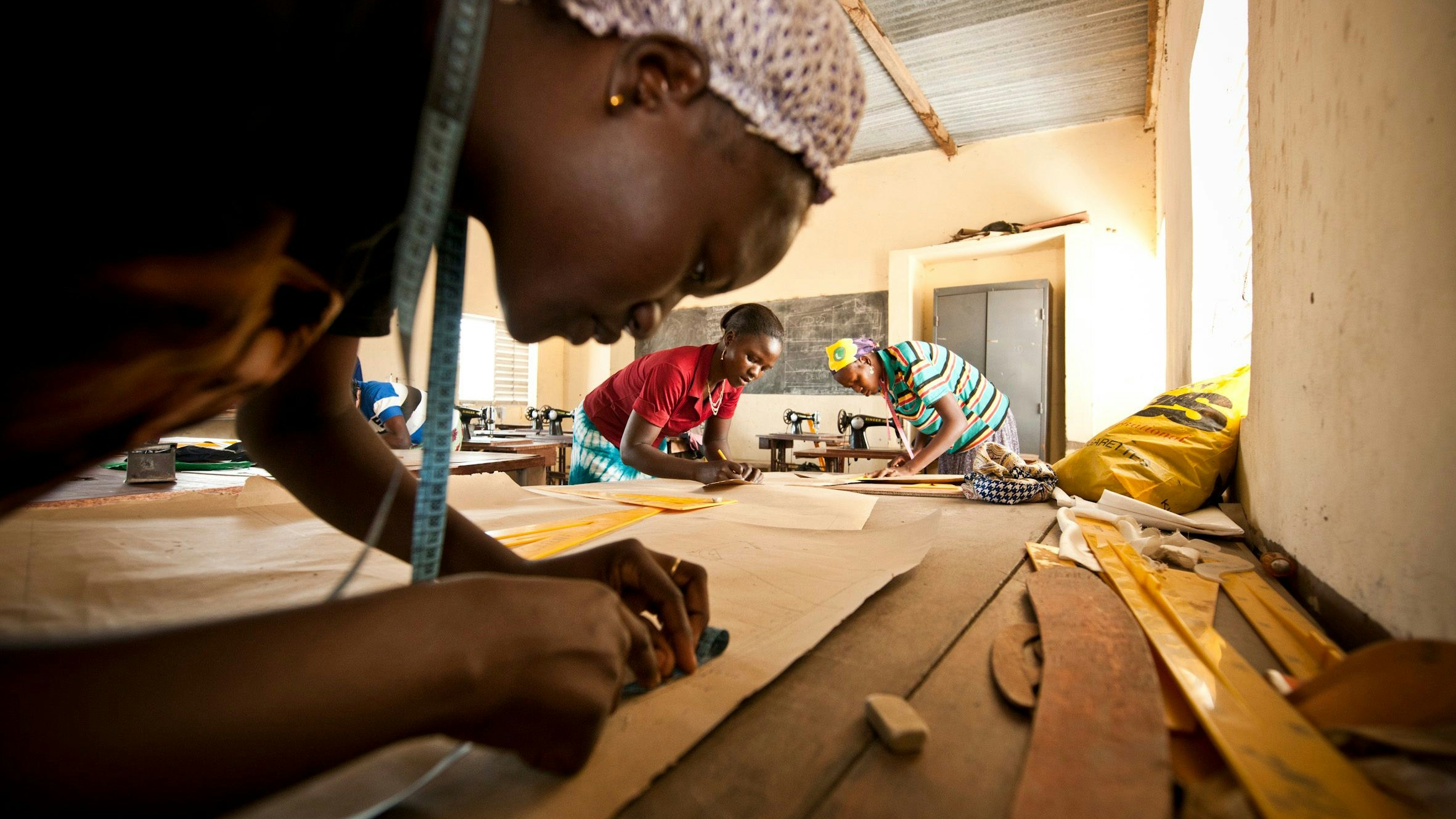
Why and how does SDC strengthen the interlinkages between basic education and VSD?
The interlinkages between basic education and VSD are relevant in various educational and economical contexts and can be implemented at different stages of the education system within the ‹continuum› from compulsory education through to post-compulsory education and extends to «school to work transition». It includes expanding career guidance, vocational orientation, and developing seamless education programs that bridge BE, VSD, and labor market integration.
The benefits of closely interlinking Basic Education (BE) and Vocational Skills Development (VSD). are well recognized. The Swiss Agency for Development and Cooperation (SDC) takes a holistic approach to BE and VSD with a view to bolstering the complementarity and correlation between the two (“interplay”). By combining quality basic education and the acquisition of vocational and technical skills relevant to the local labour market and strengthening the complementarity between BE and VSD, SDC's programmes lay the foundation for decent work, improved living conditions, and sustainable economic growth.
Basic education provides foundational skills for further VSD and lifelong learning
Basic education allows learners to develop basic skills, also referred to as foundational skills. Foundational skills, with literacy and numeracy proficiency at their heart, enable and scaffold all further learning. They are the building blocks and tools to further skills, including vocational skills. Foundational skills also encompass life skills such as emotional, social and cognitive abilities, valued by both employers and society (“21 Century Skills”). Especially in the context of the «Fourth Industrial Revolution», fast changing societies and evolving global challenges, lifelong learning and training are a must and foundational skills crucial in preparing individuals for rapidly changing job market, where adaptability is crucial.
Evidence shows that foundational skills are best acquired from an early age and by completing lower secondary education. However, in least developing countries, up to 87% of children drop out before completing basic education. This highlights the need to improve access to quality basic education and to offer opportunities for youth to catch up on missed basic skills before or during VSD programmes.
add graphic
Interlinking basic education and VSD for labour market integration and economic development
Foundational skills are critical for successful apprenticeships and future job prospects. Combining basic education and vocational skills development is essential for securing decent work and fostering inclusive, sustainable economic development.
The interlinkages between basic education and VSD are relevant in the contexts of education, vocational education and training as well as in inclusive economic development, or other initiatives aimed at enhancing labour market integration e.g. for migrants or displaced people. Interconnected BE/VSD approaches can be implemented at different levels of the education system within the ‹continuum› from compulsory education up to lower-secondary level, through to post-compulsory education. This includes both vocational education and training and general education at the upper secondary level, and extends to the transition to the labour market (‘school to work transition’), including non-formal programmes.
Strategies for strengthening these connections include enhancing vocational orientation and career guidance, expanding access to career counseling and job matching services or developing sequential education programs that form a continuum from BE to VSD and onward to the labour market.
Key documents
Interlinking BE and VSD for Labour Market Integration and Economic Development - How to Do Note - SDC [DELETE]
Interlinking Basic Education, Vocational Skills Development and Labour Market Integration - SDC
Promoting and Ensuring Permeability in Education System Reform - A Ticket up and a Ticket out - ETH [DELETE]
Resources from our partners
Index
Related topics

Vocational skills development
SDC’s VSD strategy integrates basic education and vocational training to enhance skills, promote job opportunities, and support sustainable economic growth.