
Introduction to vocational skills development
Vocational skills development (VSD) is a cornerstone of Swiss development cooperation and a key component of the SDC’s Education Strategy. VSD builds on the foundations of basic education to equip individuals with technical, social, and personal competencies necessary for long-term integration into formal and informal economies. SDC's comprehensive approach emphasises inclusivity, quality, and alignment with labour market demands. By incorporating green skills and adhering to the «Leave No One Behind» (LNOB) principle, SDC is prioritising equitable access to vocational training, fostering sustainable development and enhancing social and economic resilience.

Vocational skills development (VSD) plays a pivotal role in the SDC's Education Strategy, serving as a cornerstone of Swiss development cooperation. This strategy, which integrates both basic education and VSD, underscores their complementary nature.
For the SDC, education is not just a fundamental human right, but also a crucial foundation for individual, social, and economic development. Education enhances people's abilities to lead meaningful and productive lives, pursue sustainable development, and foster social cohesion and resilience.
Basic education establishes the groundwork for individual growth, social integration, economic development, and political participation. Building on this foundation, VSD aims to long-term integrate trained individuals into formal and informal economies, linking educational systems with labour market demands.
VSD and SDGs
Vocational training serves as a bridge between education (SDG 4) and employment (SDG 8). By equipping young women and men with relevant skills, it significantly increases their chances of securing decent jobs and earning better incomes. A skilled workforce not only enhances the competitiveness of companies but also directly contributes to poverty alleviation (SDG 1), reducing inequalities (SDG 10), and promoting social and economic development (SDG 8).
Definition of VSD
The broad concept of VSD encompasses all organised learning processes for the development of technical, social and personal competencies and qualifications that contribute to the sustainable long-term integration of trained people in decent working conditions in the formal or informal economy, either on an employed or self-employed basis.
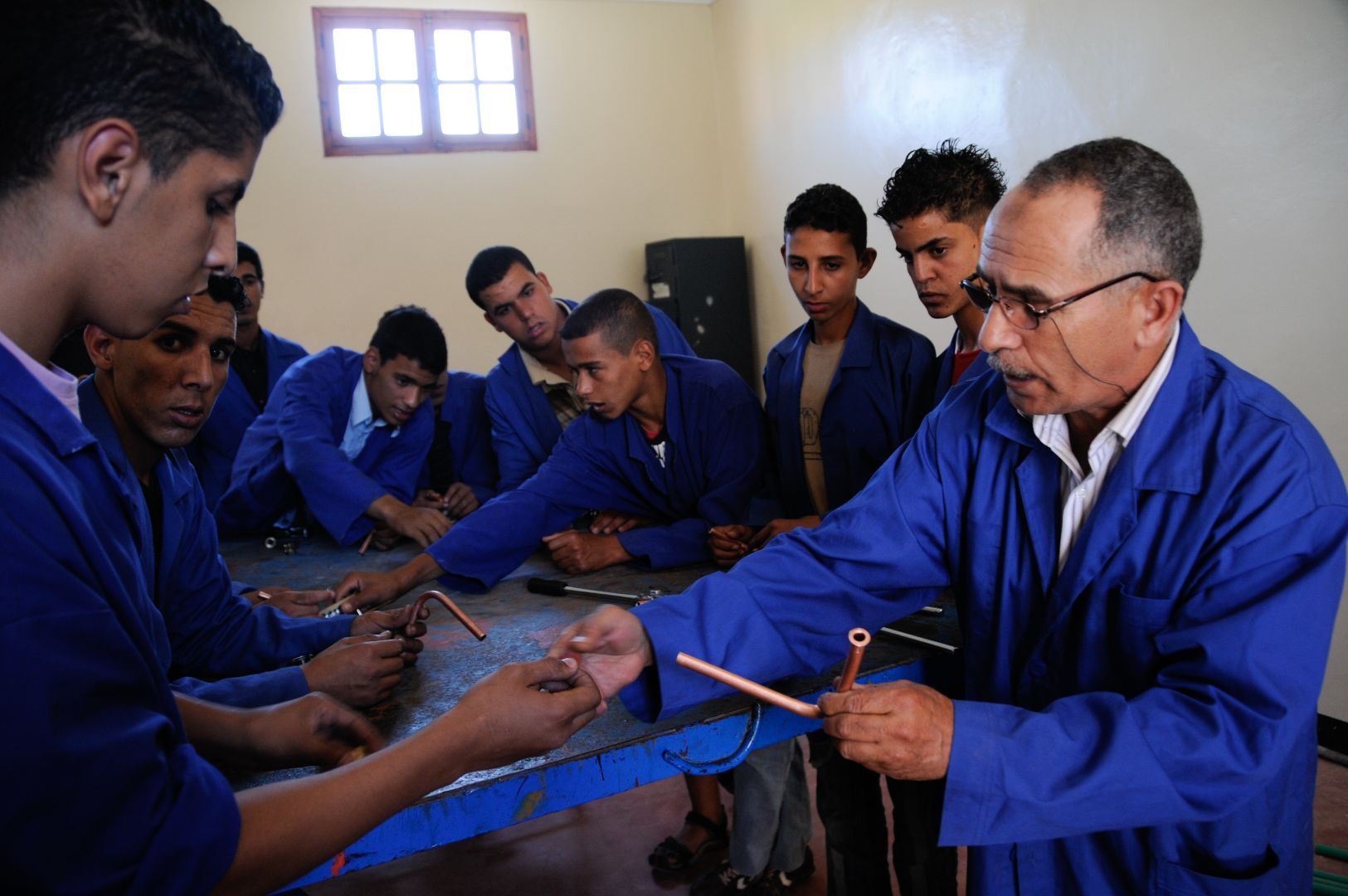
VSD usually combines theory and practice and can occur in schools or technical institutes, workshops or at the workplace in enterprises. According to the concept of lifelong learning, VSD can occur at all education levels, from secondary to tertiary, and be acquired throughout an individual’s economically active life. It includes formal and non-formal VSD offers.
The SDC approach
Promoting skills training may enhance the employability of our target groups but does not automatically lead to more jobs. To effectively encourage employment, it is necessary to complement VSD projects with additional measures, particularly those focused on private sector and financial system development. The synergy with basic education is crucial for including vulnerable groups, facilitating an informed transition from compulsory schooling to VSD and supporting lifelong learning pathways for individuals.
Supporting the creation of an inclusive economy is a cornerstone of the SDC’s efforts. This also aligns with the «Leave no one behind principle», which emphasises the inclusion of marginalised and vulnerable populations in VSD initiatives, ensuring that everyone has the opportunity to acquire valuable skills. SDC adopts a context-specific, comprehensive approach to VSD, focusing on access, quality, and integrating basic education with labour market demands and private sector involvement. This strategic orientation ensures that vocational training is relevant and effective in various contexts.
As VSD belongs to different policy areas and expectations are diverse, there is no one-size-fits-all approach. Vocational skills development serves different purposes and pursues different, sometimes even conflicting, objectives – even if they all have employment and income as long-term objectives. That’s why a typology of VSD approaches was developed, based on a coordinate system that structures the landscape of possible VSD interventions and helps with priority setting and shuffling across time, according to the context. Based on the typology mentioned above of VSD approaches, the working aid Typology of VSD approaches, including Add-Ons on Roles and interests of the private sector, Governance issues in VSD, Engagement with the private sector, Dual Vocational Education and Training, have been produced.
Dual vocational education and training and Swiss competences
The SDC’s strong engagement in VSD is also anchored in Switzerland’s successful national implementation of vocational education and training (VET). Two-thirds of young people in Switzerland benefit from the solid foundation provided by vocational education and training. In Switzerland and other countries such as Austria, Germany, and Liechtenstein, VET is predominantly based on the so-called dual system. This system is characterised, amongst other things, by a strong collaboration with the private sector through individual companies and professional organisations.
In the projects of the SDC, the concepts of dual VET are adapted to the conditions in the partner country, taking existing structures into account – and refraining from using the Swiss dual system as a blueprint. Depending on a project’s focus, this may take very different forms (see the page on dual VET).
Skills for the green transition
The shift to an inclusive green economy is transforming industries, labour markets, and the skills people need to thrive. Green jobs require not only technical expertise, but also the values and attitudes that enable workers to contribute to a sustainable future. From clean energy to sustainable agriculture, the green transition creates new economic opportunities while addressing urgent environmental challenges. Yet, it also demands rapid adaptation. Whether it’s farmers learning advanced agro-technologies, mechanics repairing electric vehicles, or hospitality workers adjusting to changing climates and landscapes. Vulnerable groups, often with low skill levels and in informal sectors, face the highest risks of being left behind. The SDC promotes the greening of technical vocational education and training (TVET) alongside measures for social and economic inclusion, ensuring that the transition is both sustainable and equitable. For more information please visit our Transversal themes and approaches page.
Key documents
Education and Vocational Skills Development - Thematic Guidance - SDC
Vocational Skills Development: Key to Employment and Income - Brochure - SDC
Insights into the SDC’s cooperation in vocational skills development
Interlinking BE and VSD for Labour Market Integration and Economic Development - How to Do Note - SDC
Work stream on Inclusive Green Economy - Input Paper - SDC
WHY skills are important for the green transition, WHAT green skills are, and HOW the SDC can define entry points for embedding green skills in VSD programmes. Work stream on Inclusive Green Economy
Vocational Skills Development VSD - Factsheet - SDC
VSD Typology - SDC
Working aids for project cycle management
Transversal guides
Index
Related topics

Vocational skills development and vocational education training systems
Vocational Skills Development (VSD) has evolved from infrastructure-focused projects to impactful, sustainable system reforms, enhancing employability and economic growth across diverse contexts.
Dual vocational skills development and private sector engagement
Private sector partnerships are key to effective VET systems. Discover how SDC adapts the successful dual VET model to global contexts for quality vocational training.

Vocational skills development in thematic contexts
How Vocational Skills Development (VSD) addresses social inclusion, youth employment, digitalisation, and migration challenges across diverse contexts.